Archive
Archive / Photos

Photogrammetry for dummies

A small metal sculpture, too many capture passes, and a model that eventually behaved.

Capture passes

What I tried

Not a tutorial. More like evidence from a small fight with a shiny metal bastard.

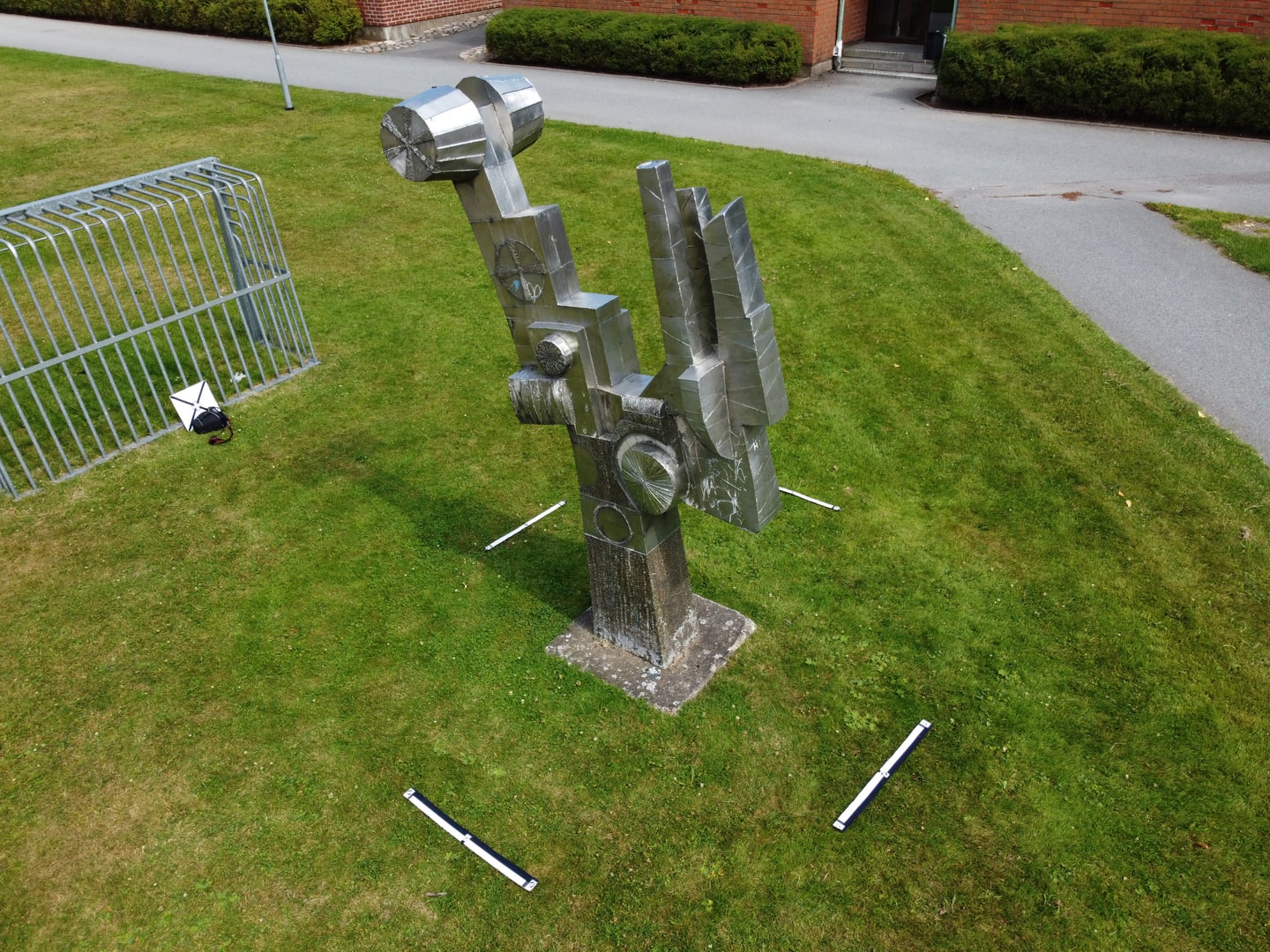
01 / Drone

Ideal weather, allegedly.

Overcast, soft light, no hard shadows

Seems I can't even get the upload right. Oh well... Overcast, soft light, no hard shadows are the ideal conditions for a capture like this. I have those photos somewhere. You're just gonna have to trust me, bro.

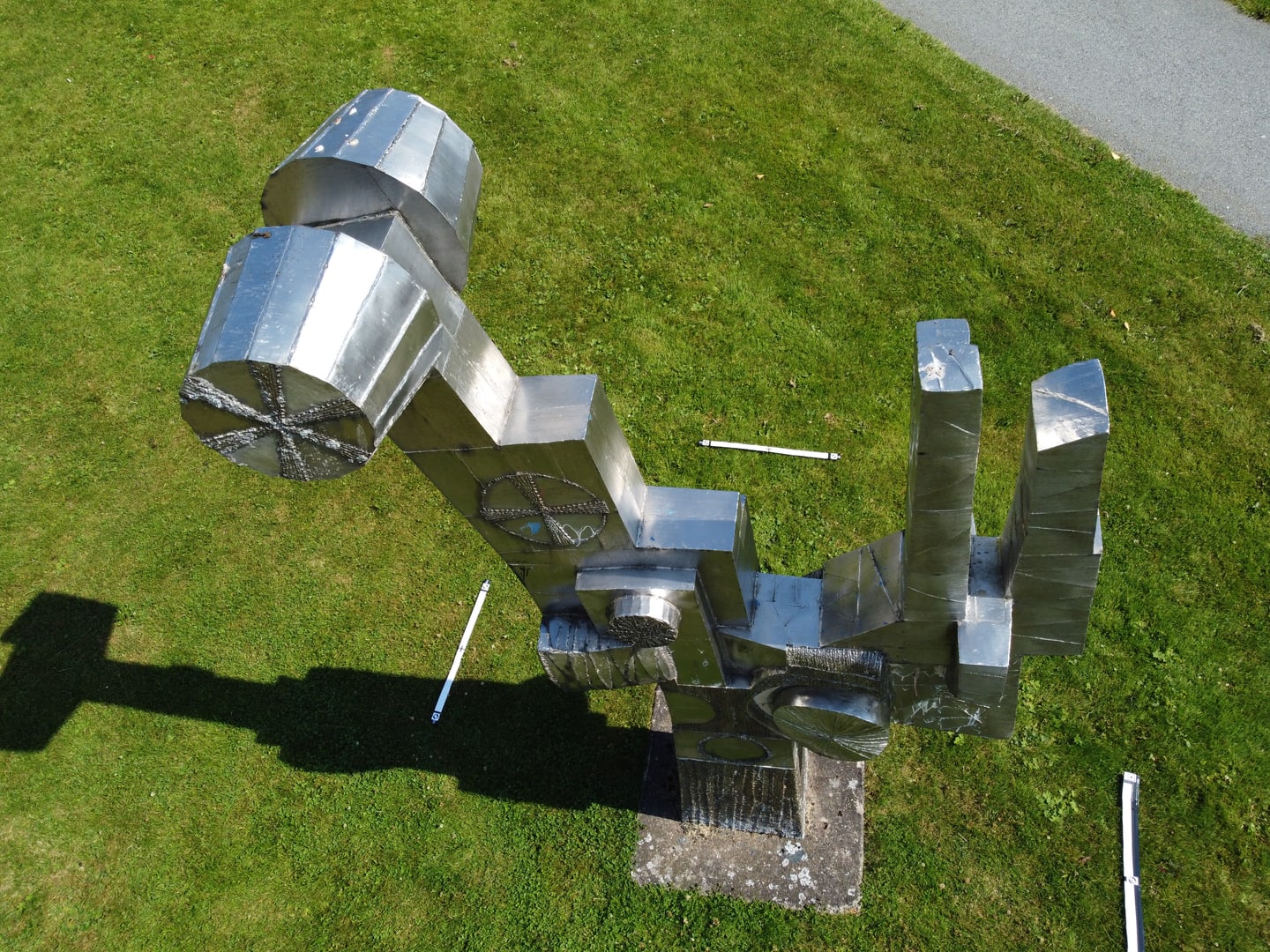
02 / Drone

A bit closer, same problem. Good.

A drone photo with shadows and direct sunlight. Very useful after an edited post like the one above. No matter. Let's talk accuracy instead.

See those straight-ish things on the ground? Those are exactly, probably, one meter long and have clear markings at certain intervals, which a computer can recognize. That helps when you are trying to identify unique features, place a digital point there, and then track that point over hundreds of images using what can only be described as black magic math. The black magic needs to know where your camera is in three-dimensional space and which direction it is pointing.

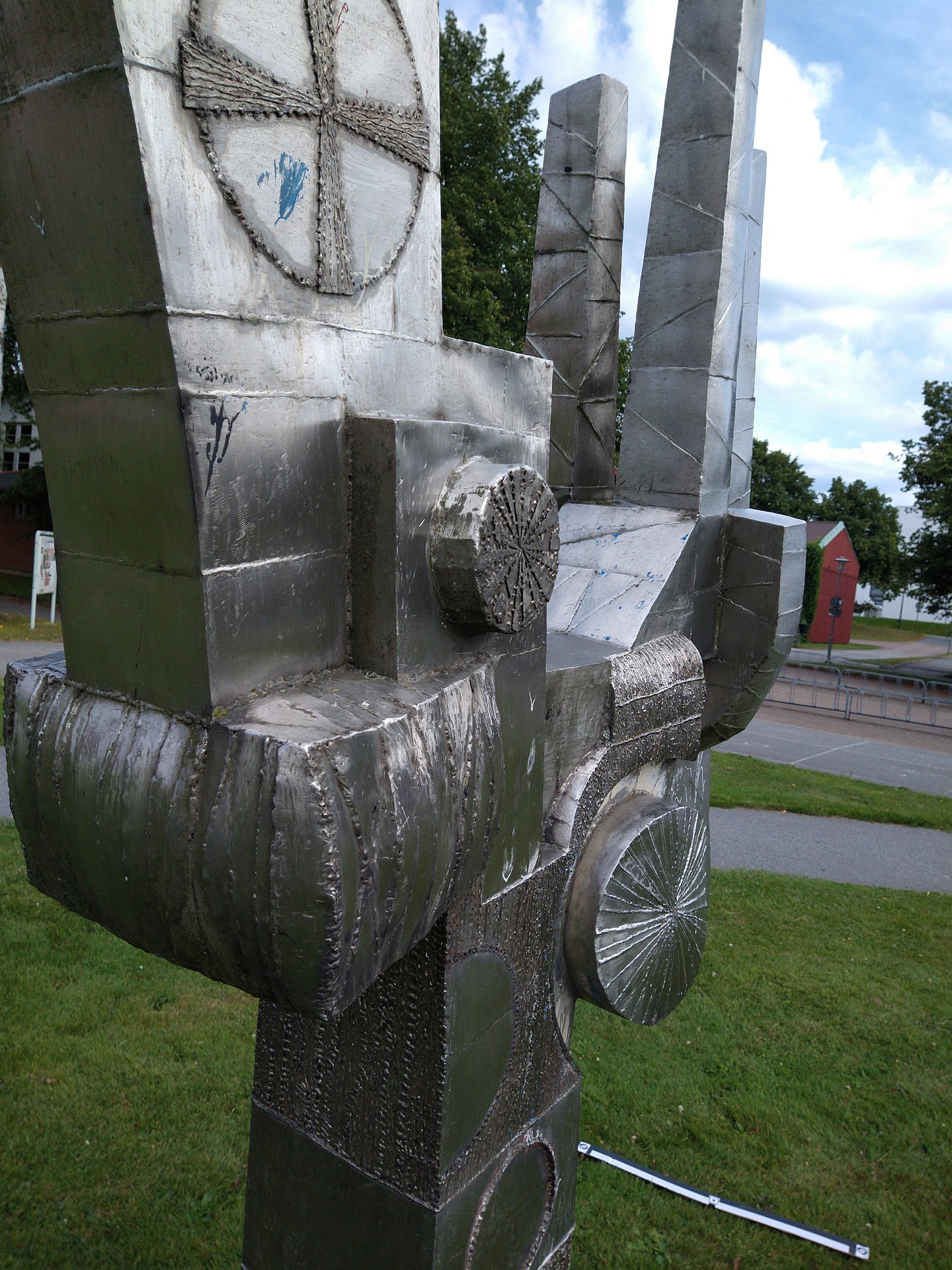
03 / Phone

Worse camera, better texture.

The phone shots are not as clean. The depth of field is worse. The phone also tries very hard to make the image look good, and it has "HDR", which of course is suuuper standardized, especially on a Motorola from around 2020.

It probably took a few photos and combined them. Bad for real-life accuracy, but it does indeed make more of a pop. This object badly needs pop. Smooth metal is an uncooperative little shit.

04 / Phone

Look at this stupid thing.

Edges, holes, shiny bits, rough bits, repeating shapes, dirt, tiny details. It is a small nightmare, which is also why it is worth scanning.

05 / Scale

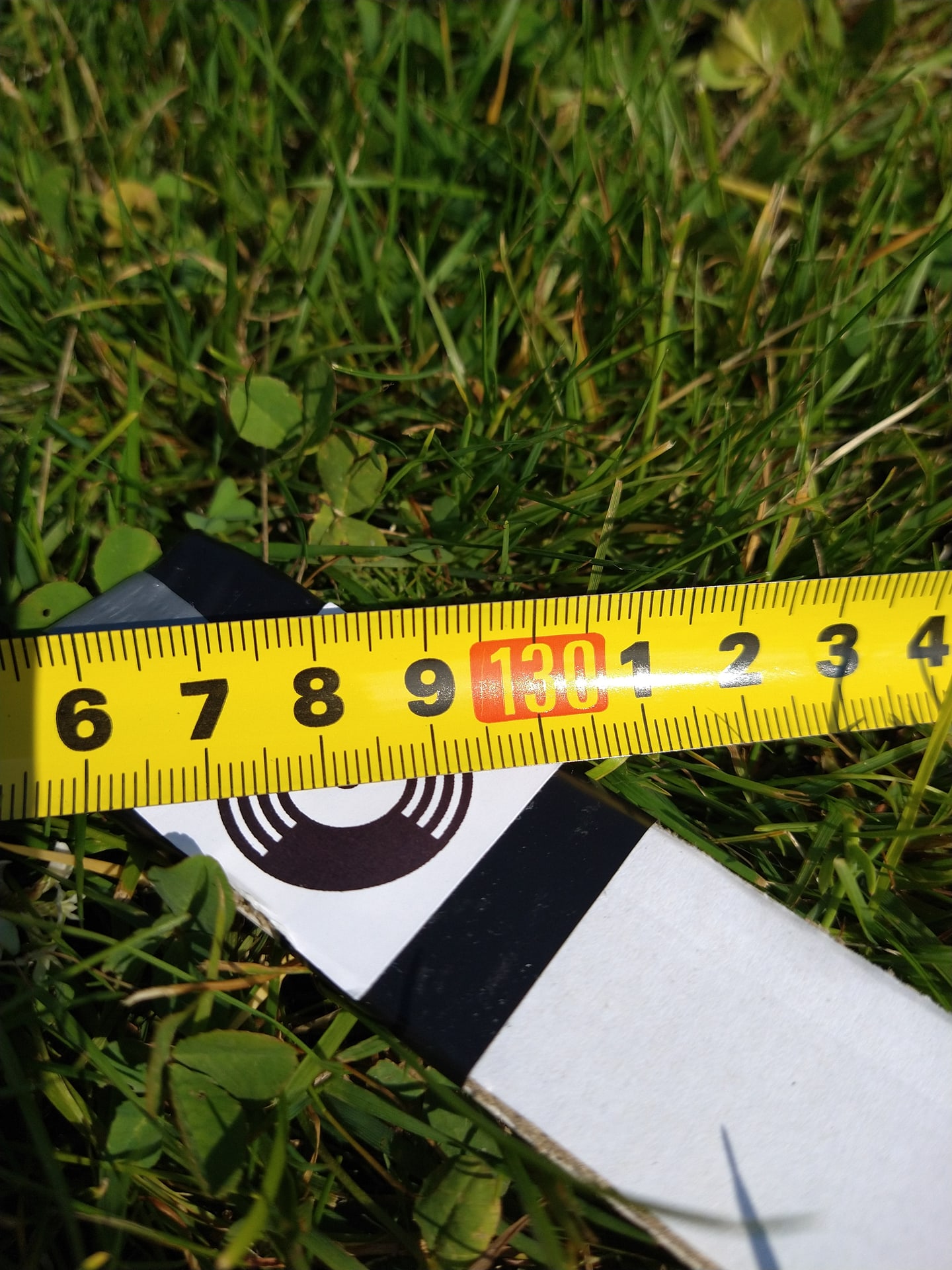
Measuring the measuring sticks. Normal behavior.

Accuracy matters, but as I look back at this a few years later, yeah... I clearly have issues.

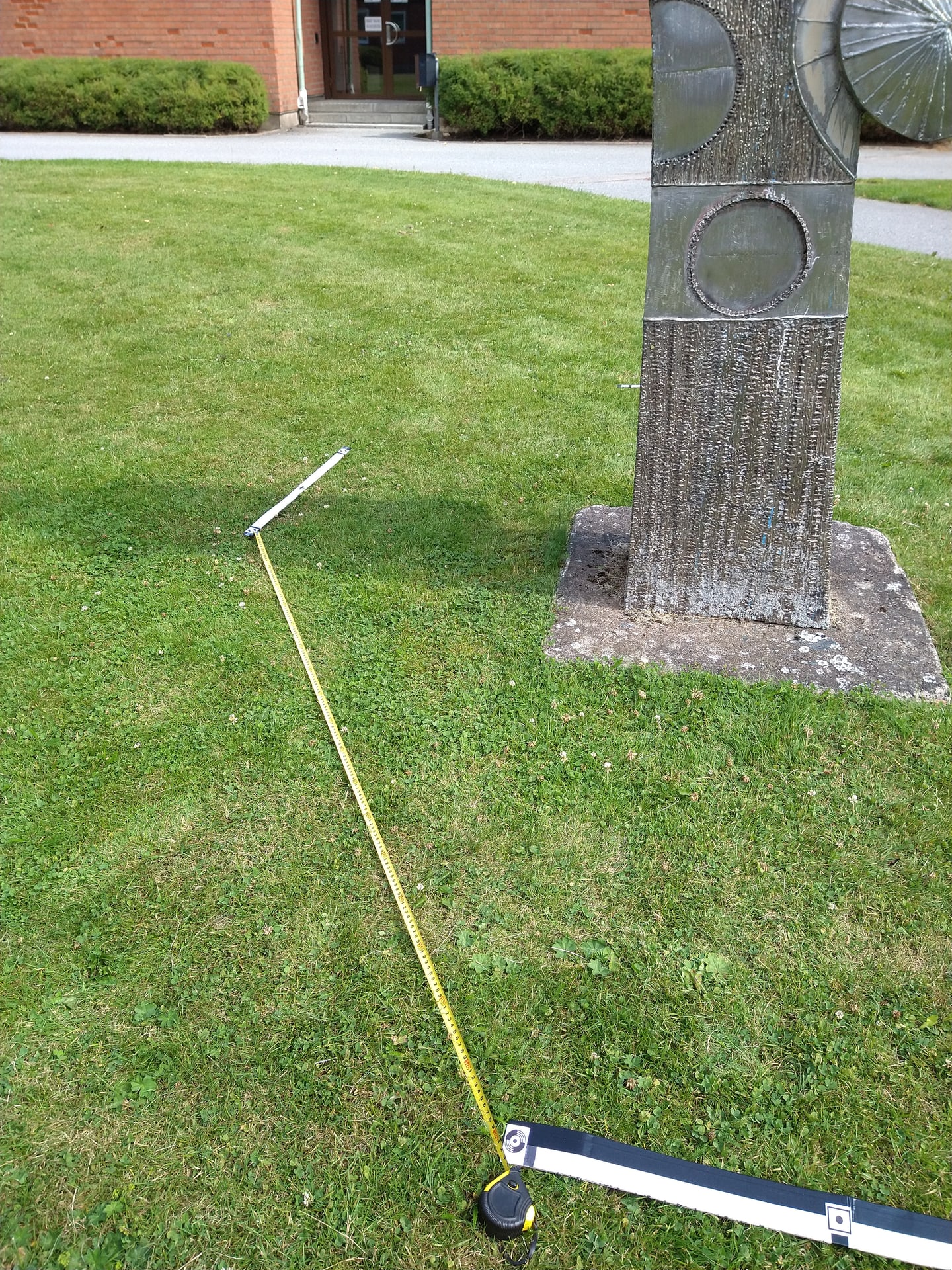
06 / Scale

The highly sophisticated measuring device.

I cannot remember what the hell I am doing here. I think I am measuring the diagonal of my homemade one meter, or whatever, precision science device. Elegant? No. Useful? Probably.

Metal photogrammetry model

3D quality · Light · 1.5 MB · No normal/AO
Metal photogrammetry model 3D quality · Light · 1.5 MB · No normal/AO

Photogrammetry is simple until you actually want a decent result. You take a pile of overlapping photos, the software tries to work out where every camera was, and if the gods are bored enough you get a mesh with a texture on it.

These were taken at different times because I did not get the result I wanted the first time. I cannot honestly tell you exactly which frames made it into the model anymore. That is annoying, but it is also pretty normal. These photos are representative enough, and more importantly they tell the story.

There are RAW files too. I ran them through DxO and produced technically better exports, but they are bland as hell without more post work. I am not doing that right now. The JPGs are less pure and more useful, which is annoying but fair.

This is not a perfect scan. Good. Perfect examples are boring and they lie.

Equipment

  • DSLR: Canon EOS 50D. Metadata confirmed on the available CR2 files.
  • Phone: Motorola G(8) Plus. Metadata confirmed on the phone JPGs.
  • Drone: DJI Mini 2. The JPG metadata reports DJI FC7303, which is the Mini 2 camera.

Related

Similar thread
Different angle
From the archive